The Power of Eucharistic Adoration: Drawing Closer to Christ
There is a silence that speaks louder than any homily, a stillness that stirs the soul more deeply than any hymn. It is the silence found in the presence of the Blessed Sacrament, where Jesus Christ—Body, Blood, Soul, and Divinity—waits for us, hidden under the humble appearance of bread. Eucharistic adoration is one of the most ancient, most beautiful, and most transformative devotions in the Catholic faith. It is not merely a pious exercise or a quaint tradition; it is a living encounter with the risen Lord, an invitation to sit at the feet of the Master just as Mary of Bethany once did, choosing the better part that will not be taken away (cf. Luke 10:42).
In our modern world, filled with noise, distraction, and relentless busyness, the practice of Eucharistic adoration stands as a radical countercultural act. It is an act of faith that declares: God is real, He is present, and He is worth my time. For those who have never experienced adoration, or for those who wish to deepen their practice, this article offers a comprehensive exploration of what Eucharistic adoration is, where it comes from, what graces it bestows, and how you can begin or enrich your own devotion to our Lord in the Blessed Sacrament.
What Is Eucharistic Adoration?
At its most fundamental level, Eucharistic adoration is the act of worshipping Jesus Christ, truly present in the Eucharist, outside of the Mass. The Catholic Church teaches that after the consecration at Mass, the bread and wine become the true Body and Blood of Jesus Christ through the miracle of transubstantiation. This real presence of Christ does not cease when the Mass ends. The consecrated hosts that remain are reserved in the tabernacle, and they continue to be the living presence of our Lord.
During Eucharistic adoration, the consecrated Host is typically placed in a monstrance—a sacred vessel often made of gold or silver, designed with rays emanating outward like the sun—and set upon the altar for the faithful to see and worship. The word "monstrance" comes from the Latin "monstrare," meaning "to show" or "to display." The faithful come before the exposed Sacrament to pray, meditate, intercede, and simply rest in the presence of God.
Adoration can take many forms. Some parishes offer "Exposition of the Blessed Sacrament" for a set period—perhaps an hour after daily Mass, or during a holy hour on a particular day of the week. Other parishes maintain perpetual adoration chapels, where the Blessed Sacrament is exposed around the clock, twenty-four hours a day, seven days a week, with committed adorers signing up for specific time slots to ensure that the Lord is never left alone. Whether for twenty minutes or twenty-four hours, the essence of adoration remains the same: being present to the One who is always present to us.
"Behold, I am with you always, until the end of the age." — Matthew 28:20
The Historical Roots of Eucharistic Adoration
The practice of adoring Christ in the Eucharist has deep roots in the history of the Church, stretching back to the earliest centuries of Christianity. While the formal practices we recognize today developed over many centuries, the underlying belief in the Real Presence of Christ in the Eucharist has been held from the very beginning.
The Early Church
The earliest Christians gathered to celebrate the Eucharist in obedience to Christ's command at the Last Supper: "Do this in remembrance of me" (Luke 22:19). The writings of the Church Fathers bear witness to the belief in the Real Presence. Saint Ignatius of Antioch, writing around 110 AD, referred to the Eucharist as "the flesh of our Savior Jesus Christ." Saint Justin Martyr, writing around 150 AD, explained that the Eucharistic bread and wine are not received as ordinary food and drink, but as the flesh and blood of the incarnate Jesus.
In these early centuries, the reservation of the Eucharist was primarily practical—the consecrated elements were kept so they could be brought to the sick and the dying. But even this practical reservation carried with it a profound sense of reverence. The early Christians treated the reserved Sacrament with the utmost respect, understanding that they were in the presence of their Lord.
Medieval Development
The formal practice of Eucharistic adoration began to flourish in the Middle Ages, particularly from the eleventh century onward. As theological reflection on the Eucharist deepened, so did devotion to the Blessed Sacrament outside of Mass. The Fourth Lateran Council in 1215 formally defined the doctrine of transubstantiation, affirming what the Church had always believed: that the substance of the bread and wine truly becomes the substance of the Body and Blood of Christ.
The Feast of Corpus Christi, established in 1264 by Pope Urban IV, gave further impetus to Eucharistic devotion. This feast, with its solemn processions of the Blessed Sacrament through the streets, publicly proclaimed the Church's faith in the Real Presence and invited the faithful to deepen their adoration. Saint Thomas Aquinas composed the magnificent hymns "Tantum Ergo" and "O Salutaris Hostia" for this feast, and they remain beloved parts of Benediction services to this day.
The Counter-Reformation and Beyond
The sixteenth century saw a renewed emphasis on Eucharistic adoration as part of the Catholic Counter-Reformation. In response to Protestant challenges to the doctrine of the Real Presence, the Council of Trent (1545–1563) reaffirmed the Church's teaching with great clarity and encouraged devotion to the Blessed Sacrament. Religious orders dedicated to perpetual adoration were founded, and the practice of Forty Hours' Devotion—where the Blessed Sacrament is exposed for forty consecutive hours in memory of the time Christ spent in the tomb—became widespread.
In more recent centuries, popes have consistently encouraged Eucharistic adoration. Pope Saint John Paul II was a tireless advocate, writing in his encyclical "Ecclesia de Eucharistia" that the Church and the world have a great need for Eucharistic worship. Pope Benedict XVI, known for his deep Eucharistic theology, frequently emphasized the importance of silent adoration. And Pope Francis, despite his emphasis on going to the peripheries, has also spoken of the need to spend time before the Blessed Sacrament, reminding the faithful that we cannot give what we have not first received.
The Spiritual Benefits of Eucharistic Adoration
The graces that flow from spending time before the Blessed Sacrament are abundant and varied. While every person's experience of adoration is unique, the saints and the faithful throughout the centuries have testified to certain recurring spiritual fruits.
Deepening of Faith
Perhaps the most fundamental benefit of adoration is a deepening of faith. When we kneel before the monstrance, we are making an act of faith in something we cannot see with our physical eyes. We are trusting the words of Christ and the teaching of His Church that this small, round piece of bread is, in reality, God Himself. This act of faith, repeated over time, strengthens our belief and transforms our understanding of who God is and how He chooses to be present to us.
Saint Peter Julian Eymard, the great apostle of the Eucharist, once said that a single hour spent in adoration is worth more than all the earthly treasures one could accumulate. This is not because of any magic in the practice itself, but because of the Person we encounter there. Faith grows when it is exercised, and adoration is one of the most concentrated exercises of faith available to us.
Interior Peace and Healing
In a world that is increasingly anxious and fragmented, Eucharistic adoration offers a profound experience of peace. The silence of the adoration chapel is not an empty silence; it is a silence filled with the presence of God. Many adorers describe the experience of bringing their burdens, worries, and anxieties to the Lord in adoration, and finding that they leave with a lightness and peace that they cannot fully explain.
This peace is not merely psychological; it is the peace that Christ promised to His disciples: "Peace I leave with you; my peace I give to you. Not as the world gives do I give it to you" (John 14:27). In adoration, the Lord can touch the deepest wounds of our hearts and begin the work of healing that only He can accomplish. Many people have experienced significant emotional and spiritual healing through regular time spent before the Blessed Sacrament.
Growth in Virtue
Regular adoration has a transformative effect on character. When we spend time in the presence of perfect Love, we are gradually conformed to that Love. Adorers often report that over time, they find themselves becoming more patient, more compassionate, more forgiving, and more generous. This is not the result of their own effort alone, but the fruit of divine grace working in a soul that has opened itself to receive.
Saint Alphonsus Liguori taught that of all devotions, adoration of the Blessed Sacrament is the greatest after the sacraments, the one dearest to God and the one most helpful to us. The reason is simple: in adoration, we place ourselves directly in the path of grace. We become like a plant turning toward the sun, receiving the light and warmth needed for growth.
Clarity and Discernment
Many Catholics have found that spending time in Eucharistic adoration brings clarity to difficult decisions and situations. When we quiet our minds and hearts before the Lord, we create space for the Holy Spirit to speak. This is not to say that God always provides dramatic revelations during adoration—more often, His guidance comes subtly, as a quiet impression, a growing conviction, or a gradual unfolding of understanding.
Saint Teresa of Calcutta was known for spending hours before the Blessed Sacrament, and she attributed the direction and fruitfulness of her ministry to this practice. She understood that before we can be instruments of God's love in the world, we must first receive that love in the silence of prayer. Adoration is one of the most powerful ways to cultivate the kind of listening heart that is essential for discerning God's will.
Strengthening of Relationships
While adoration is often an individual practice, its fruits extend outward into our relationships with others. When we are at peace with God, we are more capable of being at peace with our neighbor. When we have received mercy, we are more able to extend mercy. Many families have been transformed by the practice of adoration—marriages have been healed, parent-child relationships have been restored, and friendships have been deepened.
The Eucharist is, by its very nature, a sacrament of communion. It draws us into deeper union not only with Christ but with all the members of His Body. When we adore the Lord in the Blessed Sacrament, we are praying in solidarity with the whole Church, and the graces we receive overflow into every dimension of our lives.
How to Practice Eucharistic Adoration
For those who are new to adoration, or who wish to deepen their practice, here are some practical suggestions for making the most of your time before the Blessed Sacrament.
Finding an Adoration Chapel
The first step is to find a place where Eucharistic adoration is offered. Many Catholic parishes offer regular hours of adoration, and some maintain perpetual adoration chapels that are open around the clock. Your diocesan website, parish bulletin, or a simple online search can help you locate adoration opportunities near you. If you are new to the practice, you might begin by attending a scheduled holy hour at your parish, where others will be present and there may be some structure to the time of prayer.
Arriving and Settling In
When you arrive at the adoration chapel, you will typically see the Blessed Sacrament exposed in a monstrance on the altar. As a sign of reverence, it is customary to genuflect on both knees when the Blessed Sacrament is exposed (as opposed to the single genuflection we make when passing the tabernacle). Find a comfortable place to sit or kneel, and take a few moments to settle in. Let go of the mental noise and distractions you brought with you. Take a few deep breaths. Remember where you are and Who is before you.
Ways to Pray During Adoration
There is no single "right" way to spend time in adoration. The most important thing is to be present with an open heart. Here are several approaches you might use, and you may find that different approaches are helpful at different times:
**Silent Prayer and Meditation:** Simply sit in the presence of the Lord and open your heart to Him. You do not need to say anything or think anything in particular. Let your being speak to His being. This form of prayer can be challenging for beginners, but it is one of the most rewarding over time. As the Cure of Ars, Saint John Vianney, recounted about a simple peasant who spent long hours before the tabernacle: when asked what he did during all that time, the man replied, "I look at Him and He looks at me."
**Scripture Reading:** Bring your Bible and read slowly and prayerfully. The Gospels are especially fitting for adoration, as you can meditate on the words and actions of the very Person who is present before you. You might read the day's Mass readings, a favorite psalm, or a passage that has been on your heart.
**The Rosary:** Praying the Rosary before the Blessed Sacrament is a beautiful way to meditate on the mysteries of Christ's life, death, and resurrection in His very presence. Many adorers find that the Rosary takes on a special depth and fruitfulness when prayed in adoration.
**Journaling:** Some people find it helpful to write during adoration—recording their thoughts, prayers, struggles, and the inspirations they receive. Journaling can be a wonderful way to track your spiritual growth over time and to remember the graces you have received.
**Liturgical Prayers:** You might pray the Liturgy of the Hours, the Divine Mercy Chaplet, a litany, or other formal prayers. These prayers connect your personal devotion to the prayer of the universal Church.
**Simple Conversation:** Talk to Jesus as you would talk to a friend. Tell Him about your day, your joys, your sorrows, your fears, and your hopes. Ask for His help. Thank Him for His blessings. This kind of simple, heartfelt conversation is one of the most natural and powerful forms of prayer.
Dealing with Distractions
One of the most common challenges in adoration is dealing with distractions. Your mind will wander. You will think about your grocery list, your work deadlines, a conversation that bothered you. This is perfectly normal and nothing to be discouraged about. When you notice that your mind has wandered, simply and gently bring your attention back to the Lord. Each time you do this, you are making a small act of love—choosing Christ over the noise.
The saints assure us that even a distracted hour spent before the Blessed Sacrament is immensely valuable. God sees our intention and our desire to be with Him, and He rewards even our imperfect efforts with abundant grace. Do not be discouraged if adoration feels "dry" or if you do not experience dramatic consolations. Faithfulness in the ordinary is the foundation of the spiritual life.
Making a Commitment
While occasional visits to the Blessed Sacrament are wonderful, the greatest fruits of adoration come from regular, committed practice. Consider signing up for a weekly holy hour at your parish. Even if a full hour seems daunting, begin with thirty minutes, or even fifteen. The important thing is consistency. Over time, you will likely find that your holy hour becomes one of the most cherished parts of your week, and you may even find yourself wanting to spend more time in the Lord's presence.
Personal Transformation Through Adoration
The stories of lives transformed through Eucharistic adoration are countless. Throughout the centuries, saints and ordinary faithful alike have testified to the extraordinary power of spending time before the Blessed Sacrament.
Archbishop Fulton Sheen, one of the most beloved Catholic communicators of the twentieth century, made a daily holy hour before the Blessed Sacrament for his entire priestly life. He credited this practice with every grace and fruitfulness in his ministry. He often said that the time he spent in adoration was not time taken from his work, but the source and sustenance of all his work.
Saint Maximilian Kolbe, the great apostle of the Immaculate and martyr of charity at Auschwitz, was sustained by his profound devotion to the Eucharist. In the darkest circumstances imaginable, his faith in the Real Presence of Christ gave him the courage to offer his life for a fellow prisoner. His heroic charity was the fruit of a life spent in intimate communion with the Eucharistic Lord.
In our own time, countless parishes and communities have been revitalized through the establishment of Eucharistic adoration. Where adoration chapels have been opened, vocations to the priesthood and religious life have increased, marriages have been strengthened, conversions have multiplied, and a renewed sense of the sacred has taken root in parish life.
The reason for this is simple: Eucharistic adoration brings us face to face with the source of all grace. When we spend time in the presence of the Lord, we are changed—not by our own effort, but by the power of His love. The Eucharist is the "source and summit of the Christian life," as the Second Vatican Council taught (Lumen Gentium, 11), and adoration is one of the most direct ways we can draw from this inexhaustible source.
Eucharistic Adoration at Camp Deo Gratias
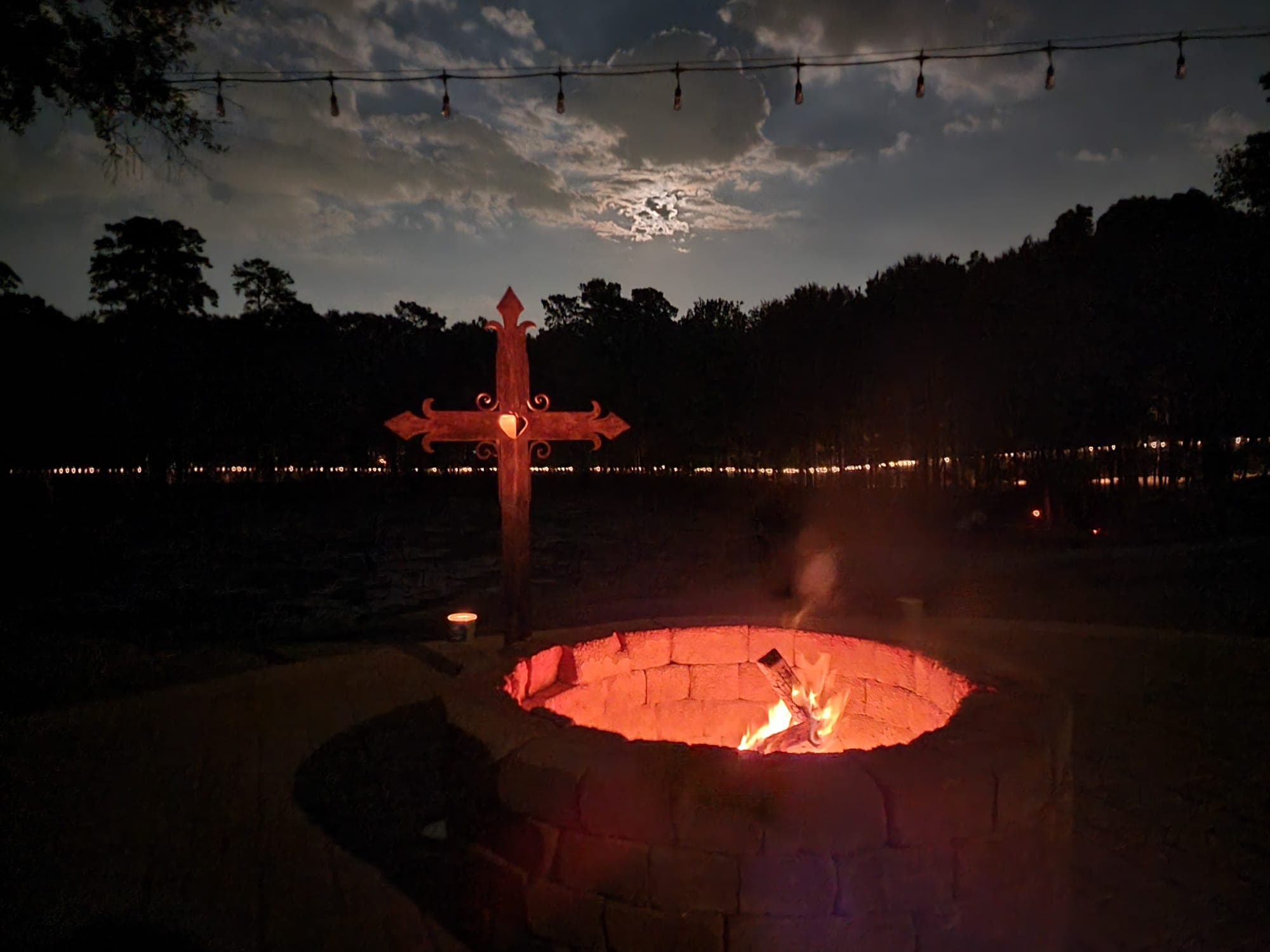
At Camp Deo Gratias, we believe that Eucharistic adoration is not just a devotion but a way of life. Our retreats and gatherings provide opportunities for extended periods of adoration, often in the setting of natural beauty that lifts the heart to God. There is something profoundly moving about adoring the Lord under the stars, by the light of a bonfire, surrounded by the quiet sounds of creation.
We have witnessed again and again the transformative power of adoration in the lives of those who come to our programs. Young people who arrive distracted and disconnected leave with a new fire in their hearts. Families who come burdened with conflict and stress leave with a renewed sense of unity and purpose. Individuals who come seeking answers leave with something even better—a deeper relationship with the One who is the answer to every question.
We encourage all our guests and community members to make Eucharistic adoration a regular part of their spiritual lives. Whether you visit a local adoration chapel, attend a weekly holy hour at your parish, or join us for a retreat at Camp Deo Gratias, the invitation is the same: come and be with the Lord. Let Him look at you, and look at Him. Let His presence heal, transform, and set you on fire with love.
A Final Invitation
If you have never spent time in Eucharistic adoration, we invite you to give it a try. Find a parish near you that offers adoration and simply show up. You do not need to know what to do or say. You do not need to have your prayer life figured out. Just come as you are, and let the Lord do the rest.
And if you are already a committed adorer, we encourage you to go deeper. Invite someone to join you. Share your experience with others. Become an advocate for adoration in your parish. The world is in desperate need of the graces that flow from the Blessed Sacrament, and you can be an instrument of those graces by your faithful presence before the Lord.
"Could you not keep watch with me for one hour?" — Matthew 26:40
The Lord is asking each of us this question. Let our answer be a generous, wholehearted "Yes." Let us draw near to Him in the Blessed Sacrament, and let His love transform us from the inside out. In the silence of adoration, we will discover what the saints have always known: that to be in the presence of Jesus is to be at the very heart of reality, and that nothing in this world can compare to the joy of knowing and loving Him.