Catholic Community: Why Fellowship Matters for Your Faith
From the very beginning, God declared that it is not good for man to be alone (Genesis 2:18). This foundational truth, spoken over the first human being in the Garden of Eden, echoes through all of salvation history and finds its fullest expression in the life of the Church. Christianity is not, and has never been, a solitary religion. It is a faith of communion—communion with God and communion with one another. The Catholic Church, in her very name, which means "universal," proclaims that the life of grace is meant to be shared, received, and celebrated in community.
Yet in the modern world, an epidemic of loneliness and isolation threatens the spiritual lives of countless believers. Many Catholics attend Mass faithfully each Sunday but feel disconnected from their fellow parishioners. Others have drifted from the Church entirely, not because they lost their faith, but because they lost their sense of belonging. In a culture that prizes individualism and self-sufficiency, the ancient Christian call to fellowship can seem quaint or even uncomfortable. But it is precisely in this cultural moment that the Church's teaching on community is most urgently needed.
This article explores the Catholic theology of community, the vital role of parish life and small groups, the crisis of spiritual isolation, and how retreats and intentional fellowship can help you build the kind of authentic Christian community that nourishes and sustains your faith.
The Theology of Community: Created for Communion
The Trinity as the Source of Community
Catholic theology teaches that community is not an afterthought or a human invention; it is rooted in the very nature of God. The Most Holy Trinity—Father, Son, and Holy Spirit—is an eternal communion of Persons, united in perfect love. God is not a solitary being but a community of love, and because we are made in His image and likeness, we too are made for relationship, communion, and self-giving love.
The Catechism of the Catholic Church states that "the human person needs to live in society. This is not just an extraneous addition but a requirement of his nature" (CCC 1879). We are not self-sufficient atoms floating independently through space; we are members of one another, called to live in relationship and mutual dependence. Our very existence is a gift received from others—from our parents, from the community that raised us, and ultimately from the God who created us for communion with Himself and with one another.
The People of God
Throughout the Old Testament, God's saving action is directed not primarily at isolated individuals but at a people. He calls Abraham not just to personal holiness but to become the father of a great nation (Genesis 12:1-3). He liberates the Israelites not as individuals but as a people, leading them together through the Red Sea and into the Promised Land. He establishes a covenant not with solitary believers but with the entire assembly of Israel.
This pattern continues and reaches its fulfillment in the New Testament. Jesus does not simply preach to individuals and send them on their way; He gathers a community of disciples around Himself. He chooses twelve apostles, forming them into a fellowship that will become the nucleus of the Church. He eats with them, prays with them, teaches them, and shares His life with them. At the Last Supper, He prays that they may all be one, as He and the Father are one (John 17:21)—a prayer that reveals the deepest purpose of Christian community: to reflect the unity of the Trinity itself.
The Body of Christ
Saint Paul develops the theology of Christian community with his profound image of the Church as the Body of Christ. "For as in one body we have many parts, and all the parts do not have the same function, so we, though many, are one body in Christ and individually parts of one another" (Romans 12:4-5). This is not mere metaphor; it is a statement of spiritual reality. Through Baptism, we are incorporated into Christ and become members of His Body. We are united to one another not simply by shared beliefs or mutual affection but by the very life of Christ that flows through us.
This understanding has profound implications for how we live our faith. If we are truly members of one body, then we cannot be indifferent to one another's suffering or flourishing. "If one part suffers, all the parts suffer with it; if one part is honored, all the parts share its joy" (1 Corinthians 12:26). The joys and sorrows of our brothers and sisters in Christ are our joys and sorrows. Their growth in holiness is our growth; their struggles are our struggles. We are in this together, and we can only reach our final destination together.
"See how they love one another." — Tertullian, describing the early Christians
The Importance of Parish Life
The Parish as Spiritual Home
For most Catholics, the parish is the primary context of their experience of community. The parish is where we are baptized, confirmed, and married. It is where we receive the Eucharist, confess our sins, and are anointed in illness. It is where we gather each Sunday to worship God and to be nourished by His Word and His Body. The parish is, or should be, our spiritual home—a place where we are known, loved, and challenged to grow in holiness.
The Second Vatican Council described the parish as "a certain community of the Christian faithful established on a stable basis within a particular church" (Code of Canon Law, Canon 515). But a parish is more than a canonical entity; it is a family. It is a diverse gathering of people—young and old, rich and poor, saints and sinners—united by their common faith in Christ and their desire to follow Him together.
Beyond Sunday Mass
While Sunday Mass is the source and summit of parish life, authentic Catholic community extends far beyond the one hour we spend in the pews each week. Vibrant parishes offer a rich array of opportunities for fellowship and growth: Bible studies, prayer groups, service projects, social events, youth programs, men's and women's groups, and much more. These activities create the spaces in which genuine relationships can form—relationships rooted not merely in proximity or shared interests but in shared faith and mutual love in Christ.
Many parishes have found that small groups or faith-sharing communities are particularly effective at fostering deep connections among parishioners. In a large parish, it is easy to feel anonymous; in a small group of eight to twelve people who meet regularly to pray, study Scripture, and share their lives, authentic community becomes possible. These groups provide a context in which people can be vulnerable, accountable, and genuinely known.
The Role of the Pastor
The pastor of a parish plays a crucial role in fostering community. When the priest is approachable, welcoming, and genuinely interested in the lives of his parishioners, the entire parish benefits. Conversely, when the priest is distant or impersonal, the parish can feel cold and unwelcoming. While no priest is perfect, the best pastors understand that their role is not merely to administer sacraments and deliver homilies but to shepherd a community—to know their sheep by name and to create an environment in which authentic fellowship can flourish.
The Crisis of Spiritual Isolation
Modern Loneliness
Despite being more "connected" than ever through social media and digital communication, modern people are experiencing unprecedented levels of loneliness and social isolation. Studies consistently show that rates of loneliness have been rising steadily, with significant impacts on both mental and physical health. This epidemic of loneliness is not only a social problem; it is a spiritual crisis.
Human beings are designed for face-to-face, heart-to-heart communion. We are made to be seen, heard, and known by others—not through screens and status updates but through the kind of presence and encounter that can only happen when people share physical space and real time together. When we are deprived of this kind of authentic connection, our spiritual lives suffer. We lose perspective. We become vulnerable to despair, cynicism, and apathy. We begin to doubt whether God is real, whether our faith matters, and whether anyone truly cares about us.
The "Nones" and the Disaffiliated
One of the most troubling trends in contemporary Catholicism is the growing number of people who have left the Church or who identify as having no religious affiliation—the so-called "nones." Research suggests that many of these individuals did not leave because they stopped believing in God or because they had a dramatic crisis of faith. Instead, they simply drifted away. They stopped attending Mass because they did not feel connected. They left because no one noticed when they were absent. They departed because the parish felt like a Sunday obligation rather than a community of love.
This painful reality is a challenge and a call to the entire Church. It reminds us that belonging is as important as believing, that people need not only to hear the Gospel but to experience it in the warmth of genuine human relationships. If the Church is truly the Body of Christ, then every member matters, and the loss of even one is a wound to the whole.
The Temptation of Spiritual Individualism
Even among Catholics who remain active in the Church, there is a temptation to treat the faith as a purely private matter—something between "me and God" that requires no community, no accountability, and no sharing. This spiritual individualism is deeply at odds with the Catholic understanding of salvation. While each person must make a personal act of faith, that faith is received, nurtured, and expressed within the community of the Church.
The saints remind us that no one is saved alone. The spiritual life is a team sport, if you will. We need the prayers of others to sustain us, the example of others to inspire us, the correction of others to keep us honest, and the companionship of others to keep us from falling into the despair that isolation breeds. As the author of Hebrews writes, "Let us consider how to stir up one another to love and good works, not neglecting to meet together, as is the habit of some, but encouraging one another" (Hebrews 10:24-25).
Building Authentic Christian Community
The Characteristics of True Fellowship
What does authentic Christian community look like? While it can take many forms, several characteristics are consistently present.
**Shared prayer.** At the heart of every genuine Christian community is prayer. When we pray together, we acknowledge our dependence on God and our unity in Christ. Shared prayer can be formal (such as praying the Liturgy of the Hours together) or informal (such as sharing personal prayer intentions and praying for one another spontaneously). What matters is that prayer is not just an opening formality but the animating center of the community's life.
**Vulnerability and authenticity.** True community requires honesty. It requires the willingness to be known—not just the polished, put-together version of ourselves, but the real, messy, struggling version. This kind of vulnerability is risky, and it requires an environment of trust and confidentiality. But when it is present, it opens the door to the kind of deep connection and mutual support that transforms lives.
**Service to one another.** Jesus told His disciples that the greatest among them must be the servant of all (Matthew 23:11). Authentic community is marked by a spirit of generous service—helping one another with practical needs, supporting one another through difficult times, and bearing one another's burdens (Galatians 6:2). This service is not a burden but a joy, because it is an expression of the love of Christ that flows through us.
**Accountability.** True friends in Christ care enough about one another to speak the truth in love (Ephesians 4:15). Accountability means having people in your life who will challenge you when you are straying from the path, encourage you when you are growing, and hold you to the commitments you have made. This is not about judgmentalism or control; it is about the kind of loving honesty that helps us become the people God created us to be.
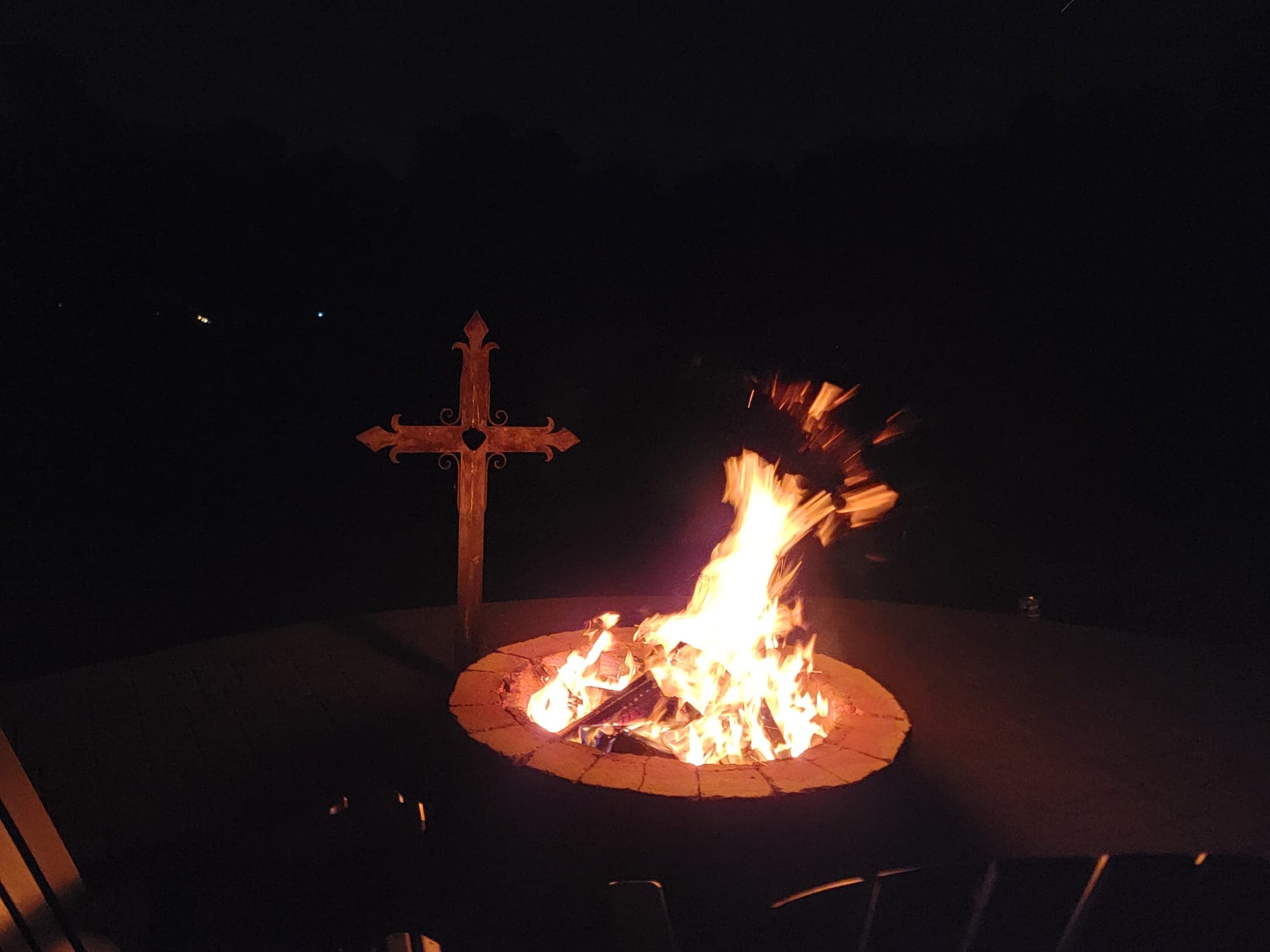
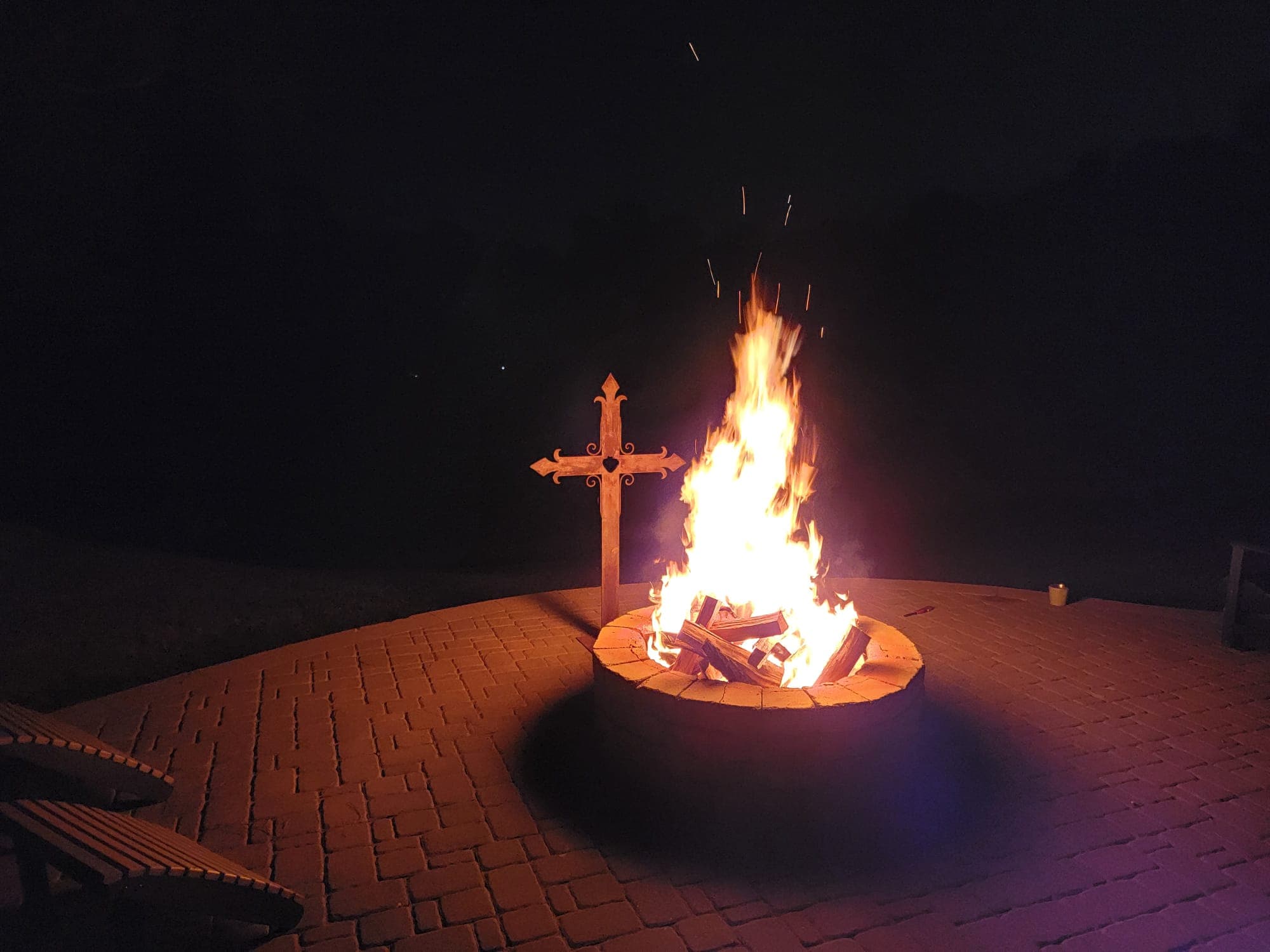
**Celebration and joy.** Christian community is not all seriousness and solemn prayer. It also involves celebration, laughter, feasting, and fun. The early Christians were known for their joyful gatherings and shared meals (Acts 2:46-47). At Camp Deo Gratias, some of our most powerful moments of community happen around the bonfire, sharing stories, roasting marshmallows, and singing together under the stars. Joy is a sign of the presence of the Holy Spirit, and authentic community should be marked by an abundance of it.
Small Groups and Faith Sharing
One of the most effective ways to build authentic community within a parish or Catholic organization is through small groups. These groups—sometimes called faith-sharing groups, Bible study groups, or discipleship groups—typically consist of eight to twelve people who commit to meeting regularly (usually weekly or biweekly) for prayer, Scripture study, and personal sharing.
The beauty of small groups is that they provide a context for the kind of intimate, personal connection that is difficult to achieve in a larger setting. In a small group, every voice can be heard, every story can be shared, and every person can be known. Over time, the members of a small group develop deep bonds of trust and affection that extend far beyond the meeting itself. They become a spiritual family—a network of support, prayer, and encouragement that sustains each member in their daily walk with Christ.
The Role of Retreats
Retreats have a long and honored place in the Catholic tradition as a means of building community and deepening faith. From the Ignatian Spiritual Exercises to the Cursillo movement, from silent monastic retreats to lively parish mission trips, the retreat experience offers something that ordinary parish life often cannot: extended, uninterrupted time together in the presence of God.
At Camp Deo Gratias, we have seen the power of retreats to forge lasting bonds of Christian community. When people step away from the demands and distractions of daily life and spend a weekend or a week together—sharing meals, praying together, worshipping together, and opening their hearts to one another—something extraordinary happens. Walls come down. Masks are removed. People discover that they are not alone in their struggles, their doubts, and their deepest longings. They discover that the Body of Christ is not an abstract theological concept but a living, breathing reality made up of real people who care about them.
The retreat setting itself plays a role in this transformation. Removed from the familiar environment of home and work, surrounded by the beauty of nature, freed from the tyranny of screens and schedules, people become more open, more receptive, and more available—to God and to one another. The shared experience of a retreat creates memories and connections that can last a lifetime.
Overcoming Barriers to Community
Building authentic community is not always easy. There are real barriers that can prevent us from experiencing the fellowship God intends for us. Here are some common obstacles and suggestions for overcoming them.
**Introversion and social anxiety.** Not everyone finds it easy to connect with others, especially in group settings. If you are naturally introverted or struggle with social anxiety, start small. Look for one-on-one opportunities for connection—a coffee with a fellow parishioner, a walk with a friend, a conversation after Mass. Small groups with a structured format can also be less intimidating than large social events.
**Busyness.** In our overcommitted culture, finding time for community can feel impossible. But community is not an optional add-on to the spiritual life; it is essential. Consider it a priority, not a luxury, and schedule it into your life accordingly. You may need to say no to some activities in order to say yes to the relationships that matter most.
**Past hurts.** Some people avoid community because they have been hurt by others in the past—perhaps even by other Catholics or by leaders in the Church. These wounds are real and should not be minimized. Healing may require time, counseling, and patient pastoral care. But the answer to relational wounds is not isolation; it is the gradual, courageous re-engagement with community in a healthy, boundaried way.
**Transience.** In a mobile society, many people do not stay in one place long enough to build deep community. If you are in this situation, resist the temptation to wait until you are "settled" before engaging. Join a small group, volunteer for a ministry, or attend a parish event. Meaningful connections can form more quickly than you might expect, especially when people are united by shared faith and intentional pursuit of fellowship.
"Where two or three are gathered in my name, there am I in the midst of them." — Matthew 18:20
The Fruits of Community
When authentic Christian community is present, the fruits are unmistakable. Faith is strengthened, hope is renewed, and love is multiplied. People who once felt alone in their struggles discover that they are surrounded by brothers and sisters who understand and care. Marriages are enriched, families are strengthened, and individuals find the courage and support they need to persevere in their vocations.
At Camp Deo Gratias, we have had the privilege of witnessing these fruits again and again. We have seen strangers become friends, and friends become family. We have seen people arrive burdened and leave free, arrive isolated and leave connected, arrive lukewarm and leave on fire. The reason is not our programming or our facilities, but the grace of God, which flows abundantly when His people come together in faith, hope, and love.
The Eucharist: Source and Summit of Community
No discussion of Catholic community would be complete without returning to the Eucharist, which the Second Vatican Council called "the source and summit of the Christian life" (Lumen Gentium, 11). The very word "communion" reveals the intimate connection between the Eucharist and the community that celebrates it. When we receive Holy Communion, we are united not only to Christ but to every other member of His Body. The Eucharist both creates and sustains the community of the Church; without it, Christian fellowship would be nothing more than a social club with shared values. With it, the Church becomes what she truly is: the living Body of Christ in the world.
Saint Paul makes this connection explicit when he writes, "Because the loaf of bread is one, we, though many, are one body, for we all partake of the one loaf" (1 Corinthians 10:17). The unity of the Church is not merely a matter of organization, agreement, or affection. It is a sacramental reality, brought about by our shared participation in the one Body and Blood of Christ. Every time we gather at the altar and receive the Eucharist, our communion with one another is renewed and deepened. Every Mass is an act of community-building in the most profound sense of the word.
This sacramental foundation gives Catholic community a depth and resilience that purely human forms of fellowship cannot achieve. Human communities are fragile—they are threatened by conflict, misunderstanding, mobility, and the passage of time. But a community rooted in the Eucharist draws its life from an inexhaustible source. Even when relationships are strained, even when personalities clash, even when the community faces external pressures and internal divisions, the Eucharistic bond endures, calling us back to the altar and back to one another again and again.
This is why the Sunday obligation matters. It is not an arbitrary rule imposed by ecclesiastical authority; it is an expression of the deepest truth about who we are as Christians. We are people who cannot live without the Eucharist, and we cannot receive the Eucharist without gathering as a community. The two realities—communion with Christ and communion with His Body—are inseparable. To receive one is to receive the other, and to neglect one is to impoverish the other.
We invite you to experience this grace for yourself. Whether you join a small group at your parish, attend a retreat at Camp Deo Gratias, or simply invite a fellow parishioner out for coffee this week, take a step toward community. You were not made to walk this road alone. You were made for communion—with God and with one another. And in that communion, you will find the joy, the strength, and the love that your heart has always been seeking.