Finding God in Nature: The Catholic Tradition of Sacred Spaces
The heavens declare the glory of God, and the firmament proclaims the work of His hands (Psalm 19:1). From the opening pages of Sacred Scripture to the teachings of the most recent popes, the Catholic tradition has consistently affirmed that the natural world is a place of divine encounter. Creation is not merely a backdrop to the spiritual life; it is itself a revelation—a great book written by the hand of God, in which every creature is a word that speaks of its Creator.
Yet in our increasingly urbanized, screen-saturated world, many Catholics have lost touch with this ancient and vital dimension of the faith. We spend our days in offices and shopping centers, our evenings before glowing screens, and our spiritual lives primarily within the four walls of our churches. While the church building is indeed the privileged place of encounter with God in the sacraments, the Catholic tradition has always recognized that God meets us in the wider creation as well. Mountains and valleys, rivers and forests, starlit skies and quiet meadows—all of these are sacred spaces where the attentive soul can hear the whisper of the divine.
This article explores the rich Catholic theology of creation, the tradition of sacred spaces and outdoor worship, the role of retreat centers and camps in fostering encounters with God in nature, and practical ways to cultivate a deeper awareness of God's presence in the natural world.
The Theology of Creation: God's First Book
Catholic theology speaks of two great books through which God reveals Himself: the book of Sacred Scripture and the book of Creation. Both are inspired by the same Author, and both speak truthfully about who God is and what He intends for the world.
The Witness of Scripture
The very first chapter of the Bible presents God as the Creator who brings all things into being by the power of His word. "In the beginning, God created the heavens and the earth" (Genesis 1:1). At each stage of creation, God steps back and declares His work "good"—and after the creation of human beings, He declares everything "very good" (Genesis 1:31). This foundational text establishes a principle that runs throughout Scripture: the material world is not evil or illusory but a genuine expression of God's goodness, beauty, and wisdom.
The Psalms are filled with praise for the Creator as revealed through creation. Psalm 104 is a magnificent hymn to God's providential care for all living things, celebrating the springs that give water to the beasts of the field, the trees where birds build their nests, the moon that marks the seasons, and the vast sea teeming with creatures beyond number. The psalmist sees in every aspect of the natural world a reason to praise the God who made and sustains it all.
The wisdom literature of the Old Testament develops this theme further. The Book of Wisdom teaches that "from the greatness and beauty of created things comes a corresponding perception of their Creator" (Wisdom 13:5). In other words, the beauty of the natural world is not a distraction from God but a pathway to Him. Those who contemplate creation with eyes of faith can see in it the fingerprints of the divine Artist.
In the New Testament, Jesus Himself constantly draws upon the natural world in His teaching. He speaks of lilies of the field, birds of the air, seeds and soil, fig trees and mustard seeds, sheep and fish, wind and rain. His parables are saturated with images from creation, suggesting that the natural world is not only beautiful but meaningful—a treasury of symbols and analogies through which divine truth can be communicated.
The Church Fathers and Medieval Tradition
The Church Fathers carried this scriptural vision forward, developing rich theological reflections on the relationship between God and creation. Saint Augustine spoke of creation as a "great book" in which God's attributes are displayed for all to see. He taught that every created thing bears within itself a trace or vestige of the Trinity, so that the attentive observer can find reflections of God's power, wisdom, and love in the smallest flower or the most distant star.
Saint Basil the Great delivered a famous series of homilies on the six days of creation (the Hexaemeron), in which he drew spiritual lessons from the characteristics of plants, animals, and the elements. For Basil, the natural world was not merely an object of scientific curiosity but a school of virtue, a place where human beings could learn patience from the growth of seeds, industry from the work of bees, and trust in God's providence from the birds that neither sow nor reap yet are fed by their heavenly Father.
Perhaps no figure in Catholic history embodies the spirituality of creation more fully than Saint Francis of Assisi. His famous "Canticle of the Creatures" praises God through Brother Sun and Sister Moon, Brother Wind and Sister Water, Mother Earth and even Sister Bodily Death. For Francis, every creature was a brother or sister, a fellow member of the great family of God's creation. His love for animals, his preaching to the birds, his gentle care for the earth—all flowed from his deep conviction that creation is sacred because it comes from the hand of God and is sustained by His love.
Modern Catholic Teaching
In more recent times, the Catholic Church has continued to develop its theology of creation with increasing urgency. The Second Vatican Council, in its document Gaudium et Spes, affirmed that "the world is not just the context but the object of God's loving plan." Pope Saint John Paul II frequently spoke of the beauty of creation as a path to God, and he encouraged the faithful to cultivate an "ecological conversion" that recognizes our responsibility to care for the earth as God's gift.
Pope Benedict XVI, often called "the Green Pope" for his attention to environmental issues, taught that creation is a gift entrusted to human stewardship and that the destruction of the natural world is a moral issue with deep spiritual dimensions. He wrote that the book of nature is "one and indivisible," encompassing both the environment and the human person, and that our treatment of one reflects our treatment of the other.
Pope Francis devoted an entire encyclical, Laudato Si', to the care of our common home. In this landmark document, he drew upon the rich tradition of Catholic creation theology to argue that the ecological crisis is fundamentally a spiritual crisis—a failure to recognize the sacred character of creation and our place within it. He called upon all people of goodwill to hear "the cry of the earth and the cry of the poor" and to respond with a renewed commitment to integral ecology.
Sacred Spaces: Where Heaven Meets Earth
Throughout its history, the Catholic Church has recognized that certain places in the natural world seem to be especially charged with the presence of God. These sacred spaces—whether mountains, springs, groves, or caves—have played a significant role in the spiritual lives of the faithful.
Biblical Sacred Spaces
The Bible is filled with accounts of divine encounters in natural settings. God spoke to Moses from a burning bush on the slopes of Mount Horeb (Exodus 3). The Israelites encountered God at Mount Sinai, where thunder, lightning, and a thick cloud signaled the divine presence (Exodus 19). The prophet Elijah heard the still, small voice of God on the same mountain, after the wind, earthquake, and fire had passed (1 Kings 19:12). Jesus Himself frequently withdrew to mountains and deserts for prayer—He was transfigured on a mountaintop (Matthew 17:1-9), He prayed all night on a hillside before choosing His apostles (Luke 6:12), and He agonized in the Garden of Gethsemane before His Passion (Matthew 26:36-46).
These accounts suggest that there is something about certain natural settings that facilitates encounter with God. The grandeur of mountains, the solitude of deserts, the quiet beauty of gardens—these environments strip away the distractions of ordinary life and create conditions in which the human heart is more receptive to the divine.
Monasteries and Retreat Centers
The monastic tradition of the Catholic Church has always been closely connected to the natural world. The early Desert Fathers and Mothers withdrew to the wilderness of Egypt and Syria, seeking God in solitude and silence. When monasticism came to Europe, the great monastic founders—Saints Benedict, Bernard, Bruno, and others—established their communities in remote and beautiful locations: hilltops, valleys, forests, and river banks.
The Benedictine tradition, in particular, has long emphasized the sanctification of ordinary work, including agricultural labor. For centuries, monasteries were centers of farming, forestry, and land stewardship, and the monks' daily labor in the fields was understood as a form of prayer and cooperation with God's creative work. The famous Benedictine motto "Ora et Labora" (Pray and Work) reflects this integration of spiritual and physical life.
In the modern era, Catholic retreat centers have continued this tradition of seeking God in natural settings. From the Jesuit retreat houses nestled in the hills of the American countryside to the Franciscan hermitages perched on Italian mountainsides, these centers offer the faithful an opportunity to step away from the noise and demands of daily life and enter into a deeper encounter with God, supported by the beauty and tranquility of the natural world.
Outdoor Worship and Pilgrimage
The Catholic tradition also includes a rich history of outdoor worship and pilgrimage. The great Marian shrines—Lourdes, Fatima, Guadalupe, Knock—are places where the Blessed Mother appeared in natural settings, and millions of pilgrims visit these sacred sites each year, many experiencing profound spiritual renewal. The tradition of outdoor Stations of the Cross, processional routes through fields and hillsides, and open-air Masses all testify to the Catholic conviction that God is not confined within church walls but is encountered wherever His people gather in faith.
In many parts of the world, Catholic communities maintain outdoor shrines, grottos, and prayer gardens. These simple sacred spaces—a statue of Our Lady nestled among trees, a crucifix overlooking a valley, a small chapel by a stream—serve as reminders that the whole of creation is God's temple and that every place can become a place of prayer.
How Nature Deepens Our Faith
Beyond the theological arguments, there are practical and experiential reasons why encounters with nature can deepen our Catholic faith.
Silence and Stillness
One of the greatest gifts that nature offers the spiritual seeker is silence. In the natural world, away from the constant noise of traffic, screens, and human chatter, we can experience a quality of silence that is increasingly rare in modern life. This silence is not empty but full—full of birdsong, wind in the trees, the gentle lapping of water, the rustle of leaves. It is a silence that calms the mind, opens the heart, and creates space for God to speak.
The saints have consistently taught that silence is essential for the spiritual life. Saint John of the Cross wrote that God's first language is silence. Mother Teresa said that God is the friend of silence and that we need silence to be able to touch souls. In nature, we find this silence readily available, waiting for us to enter in.
Wonder and Awe
The natural world has an unmatched capacity to evoke wonder and awe—what the philosopher Rudolf Otto called the experience of the "numinous." Standing before a vast mountain range, gazing at a sky ablaze with stars, watching the sun set over the ocean, or simply observing the intricate beauty of a wildflower—these experiences can stir in us a sense of something greater than ourselves, something transcendent and holy.
For the person of faith, this sense of wonder is not an end in itself but a gateway to worship. When we are awestruck by the beauty of creation, we are being drawn toward the Creator. The beauty we see is a reflection of divine Beauty; the grandeur we feel is an echo of divine Majesty. As the Catechism of the Catholic Church teaches, "The beauty of creation reflects the infinite beauty of the Creator and ought to inspire the respect and submission of man's intellect and will" (CCC 341).
Humility and Perspective
Spending time in nature has a way of putting things in perspective. Our daily worries and preoccupations, which loom so large in the confines of our routines, shrink to their proper proportions when we stand beneath an ancient tree or gaze upon a landscape that has endured for millennia. Nature reminds us that we are small, that our lives are brief, and that there is a power and a beauty in the world that far exceeds our capacity to control or comprehend.
This experience of humility is profoundly compatible with the Catholic spiritual tradition. Humility—from the Latin "humus," meaning earth or soil—is the foundation of all virtue. When we are brought low by the grandeur of creation, we are being prepared to receive the grace of God, which is always given to the humble (cf. James 4:6).
Sabbath Rest and Renewal
In the biblical tradition, rest is not laziness but a sacred act. God Himself rested on the seventh day of creation, not because He was tired, but to contemplate and enjoy what He had made (Genesis 2:2-3). The Sabbath commandment invites human beings to participate in this divine rest, stepping back from the relentless cycle of production and consumption to remember who they are and whose they are.
Time spent in nature can be a form of Sabbath rest. Walking in a forest, sitting by a lake, gardening, or simply lying in the grass and watching the clouds—these simple activities can restore the soul and reconnect us with the rhythms of creation that our busy lives so often obscure. At Camp Deo Gratias, we build these experiences into our retreats and programs, creating opportunities for our guests to slow down, breathe deeply, and rediscover the God who is as close as the air they breathe and as vast as the sky above them.
Practical Ways to Find God in Nature
How can you cultivate a deeper awareness of God's presence in the natural world? Here are some practical suggestions drawn from the Catholic tradition.
**Take regular walks in nature and pray as you walk.** The Rosary is a wonderful companion for a nature walk, as its repetitive rhythm frees the mind to contemplate the mysteries while the body moves through God's creation. You might also pray the Psalms, which are filled with references to the natural world.
**Practice the prayer of examen outdoors.** At the end of the day, sit in your garden or a nearby park and review the day in God's presence. Notice where you experienced beauty, grace, and consolation. Give thanks for the gifts of the day, including the gift of creation itself.
**Go on pilgrimage.** Visit a Marian shrine, a monastery, or a sacred site in nature. Walk the Camino de Santiago, visit the Holy Land, or simply make a day trip to a beautiful place where you can pray. The tradition of pilgrimage combines physical movement through the created world with spiritual journey toward God.
**Observe the liturgical seasons in connection with nature.** Notice how the seasons of the Church year—Advent, Christmas, Lent, Easter—correspond to the seasons of the natural year. The dying and rising of Christ is echoed in the dying and rising of nature. Let these parallels deepen your appreciation of both.
**Keep a nature journal.** Record your observations of the natural world—the changing of the seasons, the plants and animals you see, the weather, the light. Alongside your observations, write your reflections on what these things reveal about God. Over time, you will develop a deeper attentiveness to both creation and Creator.
**Support creation care.** Live simply, reduce waste, grow a garden, support sustainable practices. Caring for creation is not just an environmental issue; it is a spiritual practice that reflects our gratitude and responsibility toward the God who made all things.
Camp Deo Gratias: A Sacred Space for Encounter
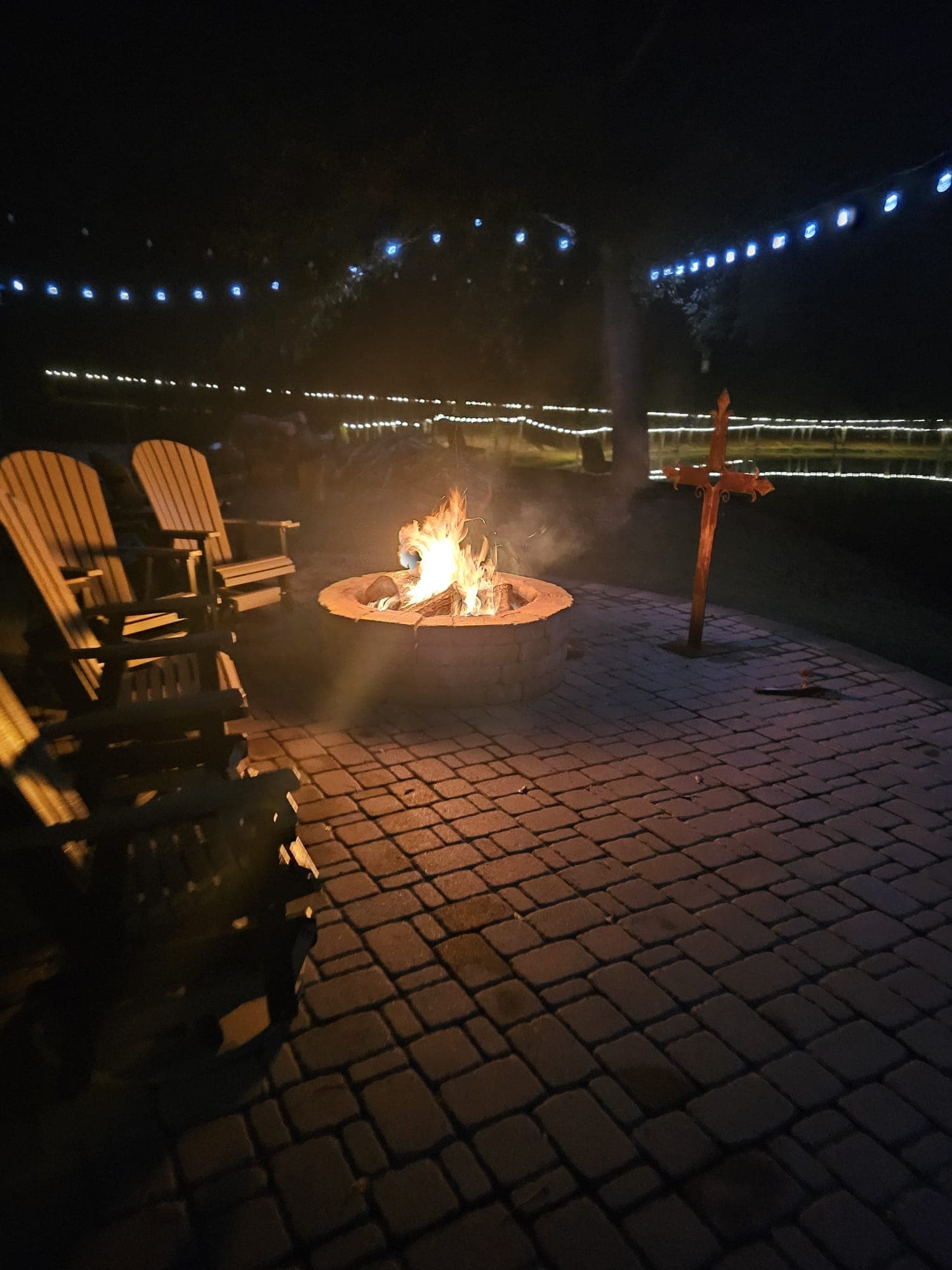
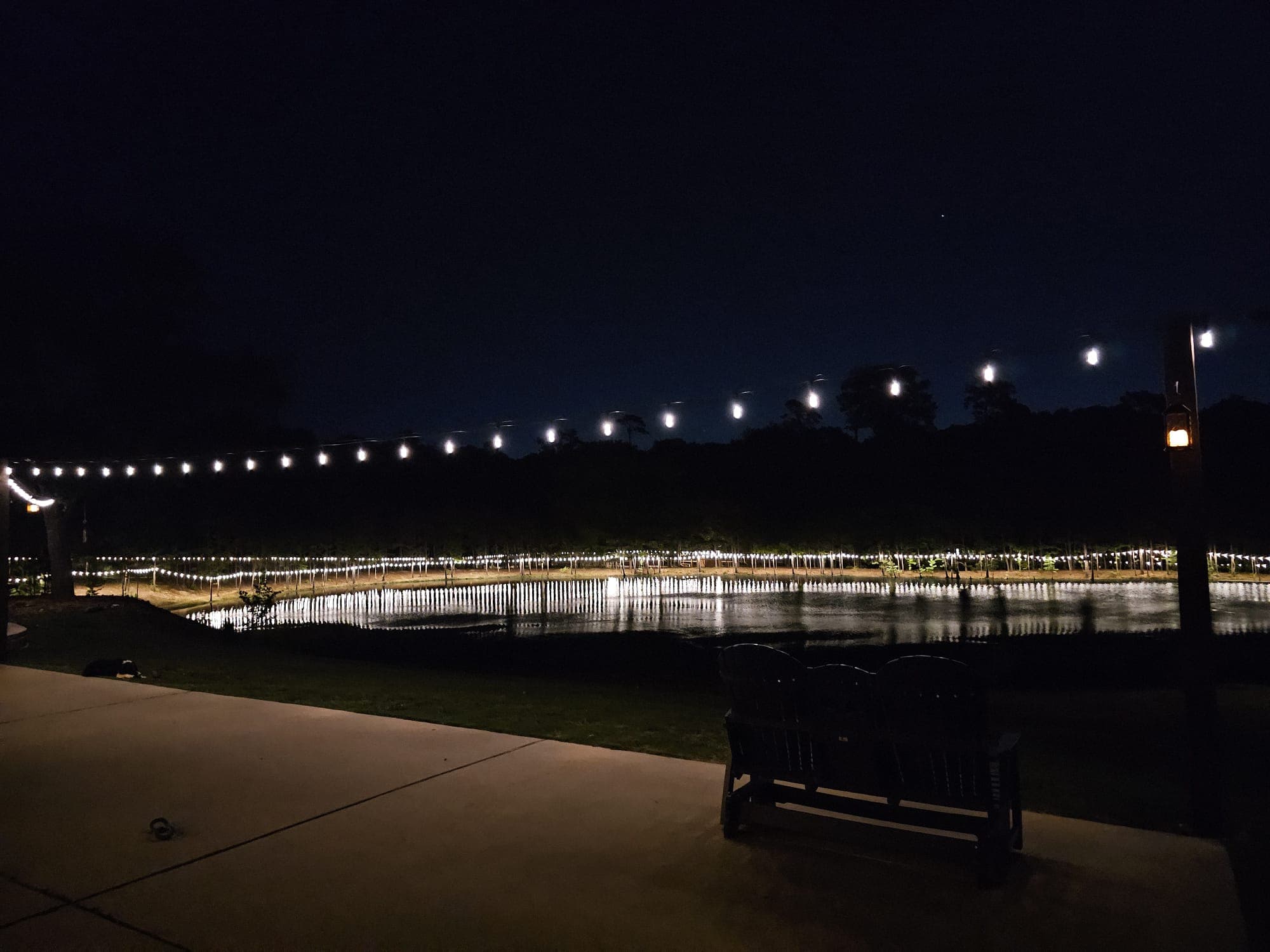
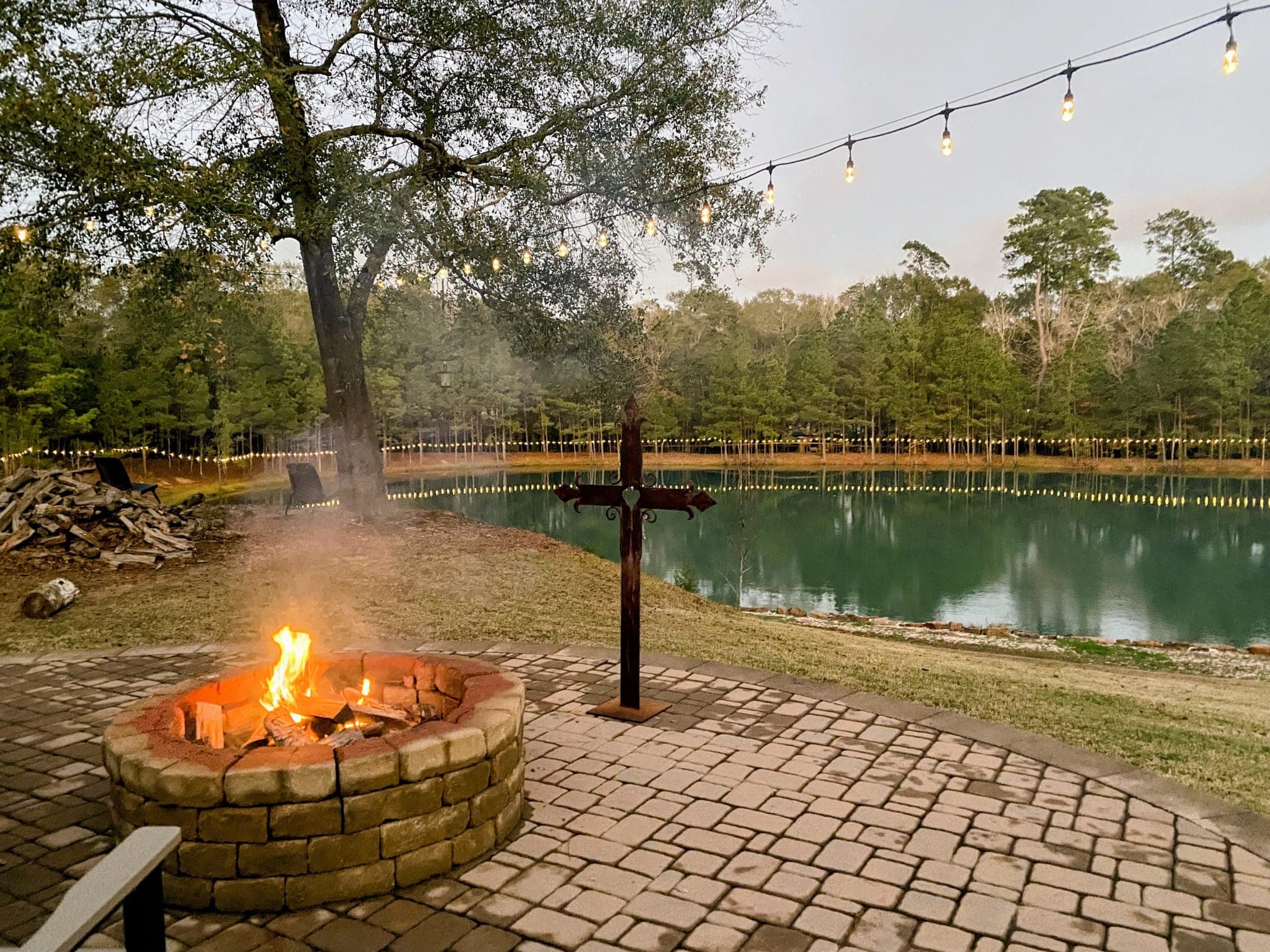
At Camp Deo Gratias, we have been blessed with a beautiful property that embodies the Catholic tradition of sacred spaces in nature. Our grounds—with their ponds, fire pits, fields, and skies filled with stars—provide a setting in which the beauty of creation naturally draws the heart toward the Creator.
Our programs are designed to integrate the natural setting into every aspect of the retreat experience. We celebrate Mass outdoors when possible, pray the Rosary while walking the grounds, hold evening prayer services around the bonfire, and offer extended periods of silence in which our guests can simply be present to the God who is present in all things.
We have seen again and again how this integration of faith and nature transforms those who participate in our programs. Children who have never seen the Milky Way gasp with wonder at the night sky and begin to understand what the psalmist meant when he wrote, "The heavens declare the glory of God." Adults weighed down by the demands of work and family find their burdens lifted as they sit by the water and let the peace of the natural world wash over them. Families reconnect with each other and with God as they share meals, stories, and prayers around the fire.
We believe that in offering these experiences, we are participating in a tradition as old as the Church itself—a tradition that recognizes the created world as a place of divine encounter, a sacred space where the veil between heaven and earth grows thin, and the human heart is opened to receive the love of God.
"The world is charged with the grandeur of God." — Gerard Manley Hopkins
The Sacramental Imagination
One of the distinctive gifts of the Catholic intellectual tradition is what theologians call the "sacramental imagination"—the capacity to see the visible world as a window onto the invisible, to perceive the divine presence shining through the material creation. This way of seeing is rooted in the Incarnation itself: if God could become man, if the eternal Word could take on flesh, then the material world is not opposed to the spiritual but is its very vehicle. Matter is capable of bearing the divine. The bread and wine of the Eucharist are the supreme instance of this principle, but the whole of creation participates in it to some degree.
The sacramental imagination enables us to see a sunset not merely as a meteorological phenomenon but as a revelation of divine beauty. It enables us to hear the song of a bird not merely as a biological function but as a note in the great symphony of creation. It enables us to feel the wind on our face not merely as moving air but as the breath of the Spirit who moves where He wills (John 3:8). This way of seeing does not deny the natural explanations of things; it simply recognizes that natural explanations do not exhaust the meaning of things. There is always more—always a deeper layer of significance, a hidden dimension of grace, a whisper of the eternal within the temporal.
Cultivating this sacramental imagination is one of the great spiritual tasks of the Catholic life, and time spent in nature is one of the most effective ways to do it. When we slow down, pay attention, and allow ourselves to be truly present to the created world, the scales fall from our eyes, and we begin to see what has been there all along: a world shot through with the glory of God, a creation that is singing its Creator's praise in every leaf and stone and wave and star.
We invite you to come and experience this grandeur for yourself. Whether you join us for a weekend retreat, a summer camp, or a day of reflection, we pray that your time at Camp Deo Gratias will help you see the world with new eyes—eyes of faith that recognize in every sunset, every breeze, and every star the loving hand of the God who made you and all things, and who calls you home.