We live in what may be the noisiest civilization in human history. From the moment we wake to the moment we sleep, and often even during sleep, we are surrounded by sound: the chime of notifications, the hum of appliances, the chatter of media, the buzz of traffic, and the relentless stream of digital voices competing for our attention. Studies suggest that the average person is exposed to between four thousand and ten thousand advertisements per day, each one clamoring for a moment of our consciousness. We scroll through feeds, toggle between tabs, and move from one stimulus to the next with barely a breath between them.
In this environment, the very idea of silence can feel foreign, uncomfortable, even threatening. We have become so accustomed to noise that its absence makes us anxious. We fill every gap with a podcast, a playlist, or a scroll through social media. We eat with screens in front of us, exercise with earbuds in, and fall asleep to the glow of our phones. The thought of sitting in genuine silence for even ten minutes can feel like an eternity.
And yet the Catholic spiritual tradition insists, with remarkable unanimity across two thousand years and every conceivable cultural context, that silence is not merely helpful for the spiritual life. It is essential. Without silence, we cannot hear the voice of God. Without solitude, we cannot know ourselves truly. Without the contemplative dimension, our faith risks becoming a frenetic collection of activities, beliefs, and obligations that never penetrate to the depths of the heart where genuine transformation occurs.
The Biblical Roots of Silence
The importance of silence is woven throughout the Scriptures, from the very first pages to the last. In the creation account, God speaks the universe into existence out of primordial silence. The Word of God does not emerge from noise but from the infinite stillness of the divine nature. Creation itself is an act of communication that presupposes a listener, and listening requires silence.
Throughout the Old Testament, the most significant encounters with God occur in settings of silence and solitude. Moses encounters the burning bush alone in the wilderness. Elijah, after his dramatic victory over the prophets of Baal, flees to Mount Horeb, where God reveals Himself not in the wind, the earthquake, or the fire but in the still, small voice, or as some translations render it, the sound of sheer silence.
"The Lord said, 'Go out and stand on the mountain in the presence of the Lord, for the Lord is about to pass by.' Then a great and powerful wind tore the mountains apart and shattered the rocks before the Lord, but the Lord was not in the wind. After the wind there was an earthquake, but the Lord was not in the earthquake. After the earthquake came a fire, but the Lord was not in the fire. And after the fire came a gentle whisper." (1 Kings 19:11-12)
This passage is a cornerstone of contemplative spirituality. It suggests that God's most intimate self-communication does not come through dramatic displays of power but through a presence so subtle that only a quiet heart can perceive it. The noise of our lives, both external and internal, can drown out this whisper as effectively as the wind and earthquake drowned out the voice of God on Horeb.
Jesus Himself models the practice of silence and solitude throughout His public ministry. Despite the pressing demands of the crowds, the needs of the sick, and the urgency of His mission, Jesus repeatedly withdraws to deserted places to pray alone. The Gospels record at least a dozen such withdrawals, suggesting that this pattern was not occasional but habitual. Before every major decision, including the selection of the Twelve, Jesus spent the night in prayer on a mountain. After every demanding period of ministry, He sought the renewal that only solitude could provide.
"Very early in the morning, while it was still dark, Jesus got up, left the house and went off to a solitary place, where he prayed." (Mark 1:35)
If the Son of God needed silence and solitude to maintain His communion with the Father, how much more do we?
The Desert Fathers and Mothers
The Christian contemplative tradition finds its most dramatic expression in the movement of the Desert Fathers and Mothers, the men and women who withdrew to the deserts of Egypt, Palestine, and Syria in the third, fourth, and fifth centuries. This movement, which began in earnest after the legalization of Christianity under Constantine, represented a radical response to the question of how to live the Gospel without compromise.
The most famous of these desert dwellers was St. Anthony of Egypt, who around 270 AD withdrew to the desert to live a life of prayer, fasting, and silence. Anthony's biographer, St. Athanasius, tells us that Anthony spent twenty years in a remote fortress, seeing no one and speaking to no one, engaged in an intense spiritual combat with the demons and an ever-deepening encounter with God. When he finally emerged, the people who gathered to see him were astonished. He was not broken or diminished by his years of solitude. He was radiant, peaceful, and overflowing with wisdom and compassion. The desert had not destroyed him; it had transfigured him.
Anthony's example inspired thousands to follow him into the desert. Within a generation, the Egyptian desert was populated with hermits and small communities of monks and nuns. These desert Christians developed a sophisticated understanding of the interior life, the movements of the heart, and the strategies of spiritual warfare that continues to inform Catholic spirituality today.
The sayings of the Desert Fathers, collected in various anthologies over the centuries, offer concentrated wisdom on the practice of silence. Abba Moses counseled a brother with these words: "Go, sit in your cell, and your cell will teach you everything." The point was not that the physical cell possessed magical properties but that the discipline of remaining in silence and solitude, resisting the urge to flee from boredom, distraction, and the uncomfortable truths that surface in quiet, was itself the teacher. In the cell, with nowhere to hide and no distractions to numb the pain, the monk was forced to confront the reality of his own heart and, beyond that, to encounter the God who dwells at the deepest center of the self.
Another desert saying captures the essence of contemplative silence: "A brother came to Abba Pambo and said to him, 'Father, teach me something.' The old man said, 'Go away and come back tomorrow.' When the brother returned the next day, the old man said, 'What can I teach you that I have not already shown you? The silence itself is the teaching.'" This exchange, in its beautiful simplicity, reveals the conviction at the heart of desert spirituality: that silence is not merely a preparation for something else but is itself a form of prayer, a mode of encounter with the living God.
Monastic Silence Through the Centuries
The desert tradition flowed naturally into the great monastic movements that shaped Western civilization. St. Benedict of Nursia, writing his Rule for monasteries in the sixth century, placed significant emphasis on silence as a component of the monastic life. The chapter of the Rule devoted to silence begins with a quotation from the Psalms: "I said, I will guard my ways, that I may not sin with my tongue." Benedict understood that excessive speech not only wastes time but actively damages the soul. It scatters attention, feeds vanity, and opens the door to gossip, complaint, and detraction.
Benedictine silence, however, is not absolute muteness. Benedict calls for a restraint in speech, a preference for listening over talking, and an awareness that words are powerful instruments that should be used with care and intention. The monastic schedule, with its regular periods of liturgical prayer, lectio divina, and manual labor, creates a rhythm of life in which silence is the default state and speech is the exception, the opposite of how most people in the modern world experience their days.
Other monastic traditions have taken the practice of silence even further. The Carthusians, founded by St. Bruno in 1084, live in individual cells and observe an almost perpetual silence, gathering together only for the common liturgy and a weekly walk during which conversation is permitted. The Trappists, a reform branch of the Cistercian order, also observe strict silence, though their interpretation has evolved over the centuries. Thomas Merton, the most famous Trappist of the twentieth century, wrote extensively about the meaning and practice of monastic silence, introducing millions of readers to a dimension of the Christian life they had never before considered.
The Carmelite Tradition
The Carmelite tradition offers another rich vein of contemplative wisdom. St. Teresa of Avila and St. John of the Cross, both sixteenth-century Spanish Carmelites, are among the greatest teachers of contemplative prayer in the history of the Church.
Teresa describes the spiritual life as a journey inward through the rooms of an interior castle, with God dwelling at the very center. The early rooms represent the active stages of the spiritual life, where the soul is primarily engaged in vocal prayer, meditation, and the practice of virtue. As the soul progresses deeper into the castle, prayer becomes simpler, quieter, and more receptive. In the deepest rooms, the soul experiences what Teresa calls the prayer of quiet and eventually the prayer of union, in which the soul is so absorbed in God that all discursive thought ceases and the person rests in pure, loving awareness of the divine presence.
John of the Cross describes a similar progression but emphasizes the painful dimension of contemplative growth. His most famous work describes the dark night of the soul, a period of profound spiritual dryness and purification through which God strips away the soul's attachments and illusions, preparing it for deeper union. The dark night is not a punishment but a gift, though it rarely feels that way to the person experiencing it. It is the silence of God that paradoxically communicates His presence more deeply than any words or consolations could.
"In the inner stillness where meditation leads, the Spirit secretly anoints the soul and heals our deepest wounds." (St. John of the Cross)
Practical Ways to Cultivate Silence
The contemplative tradition can seem intimidating or inaccessible to ordinary Catholics living busy lives in the modern world. Few of us are called to become Carthusian monks or Carmelite nuns. But the wisdom of the contemplative tradition is not reserved for monasteries. It is available to anyone willing to make room for silence in the ordinary rhythm of daily life. Here are some practical suggestions.
Begin with Small Increments
If you are not accustomed to silence, start with five minutes. Set a timer, sit in a comfortable but alert posture, and simply be present to God. Do not try to think profound thoughts or generate spiritual feelings. Just sit. Breathe. Be still. When thoughts arise, and they will, gently release them and return your attention to God's presence. Over time, as the practice becomes more natural, gradually extend the period to ten, fifteen, or twenty minutes.
Create a Sacred Space
Designate a specific place in your home as your prayer space. It need not be elaborate. A comfortable chair, a candle, a crucifix or icon, and perhaps a Bible or prayer book are sufficient. Having a dedicated space helps your mind and body associate that location with the practice of silent prayer, making it easier to enter into stillness.
Establish a Routine
Silence practiced sporadically is better than no silence at all, but consistency dramatically increases its fruitfulness. Choose a regular time for your practice and protect it. Early morning, before the household wakes, is ideal for many people. Others find that the transition period between work and home, or the quiet hour after children are in bed, works best. The specific time matters less than the consistency of the practice.
Practice Digital Fasting
One of the most practical and immediately impactful things you can do is to create regular periods of digital disconnection. Turn off your phone during meals. Leave it in another room while you pray. Designate one day per week, perhaps Sunday, as a day of minimal screen time. The constant connectivity of modern life is one of the greatest obstacles to interior silence, and even small steps toward digital fasting can create significant space for God.
Learn a Method of Contemplative Prayer
The Catholic tradition offers several well-established methods of contemplative prayer that can guide your practice. Centering prayer, developed by Trappist monks Thomas Keating and Basil Pennington, involves choosing a sacred word as a symbol of your consent to God's presence and action within you. When you notice that you have become engaged with a thought, you gently return to the sacred word. The Jesus Prayer, from the Eastern Christian tradition, involves the slow, rhythmic repetition of the phrase "Lord Jesus Christ, Son of God, have mercy on me, a sinner." Lectio divina, the ancient practice of sacred reading, includes a contemplative dimension in which the reader moves beyond words and concepts into silent communion with the God who speaks through Scripture.
Make a Retreat
Periodic retreat experiences provide an immersion in silence that daily practice cannot fully replicate. Many monasteries and retreat centers offer directed or self-directed retreats of varying lengths, from a single day to a week or more. Even a single day of retreat, spent in silence and prayer in a peaceful setting, can be profoundly renewing. For those new to the practice, a guided retreat with an experienced director can provide the instruction and support needed to navigate the unfamiliar territory of extended silence.
Embrace Nature
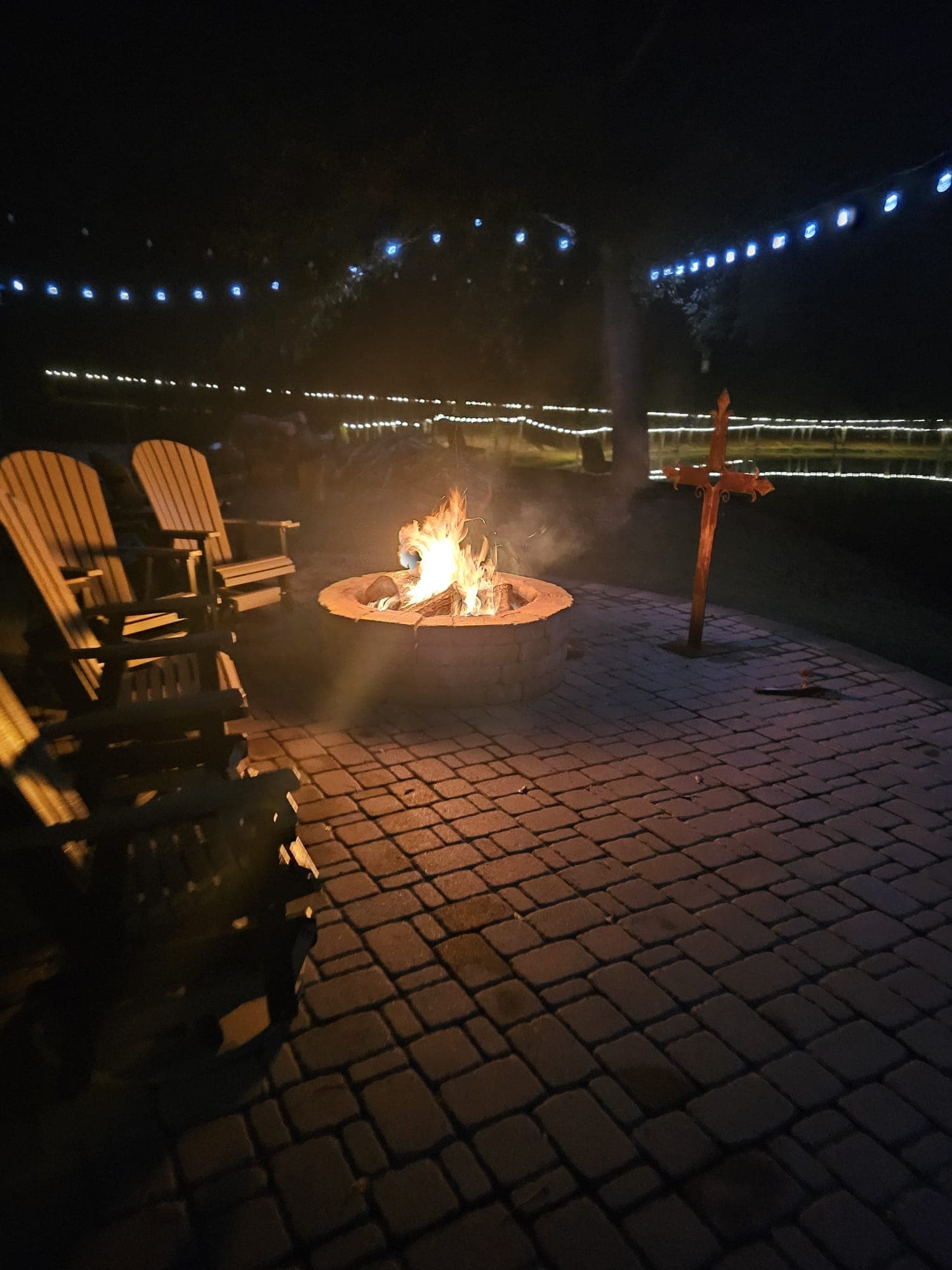
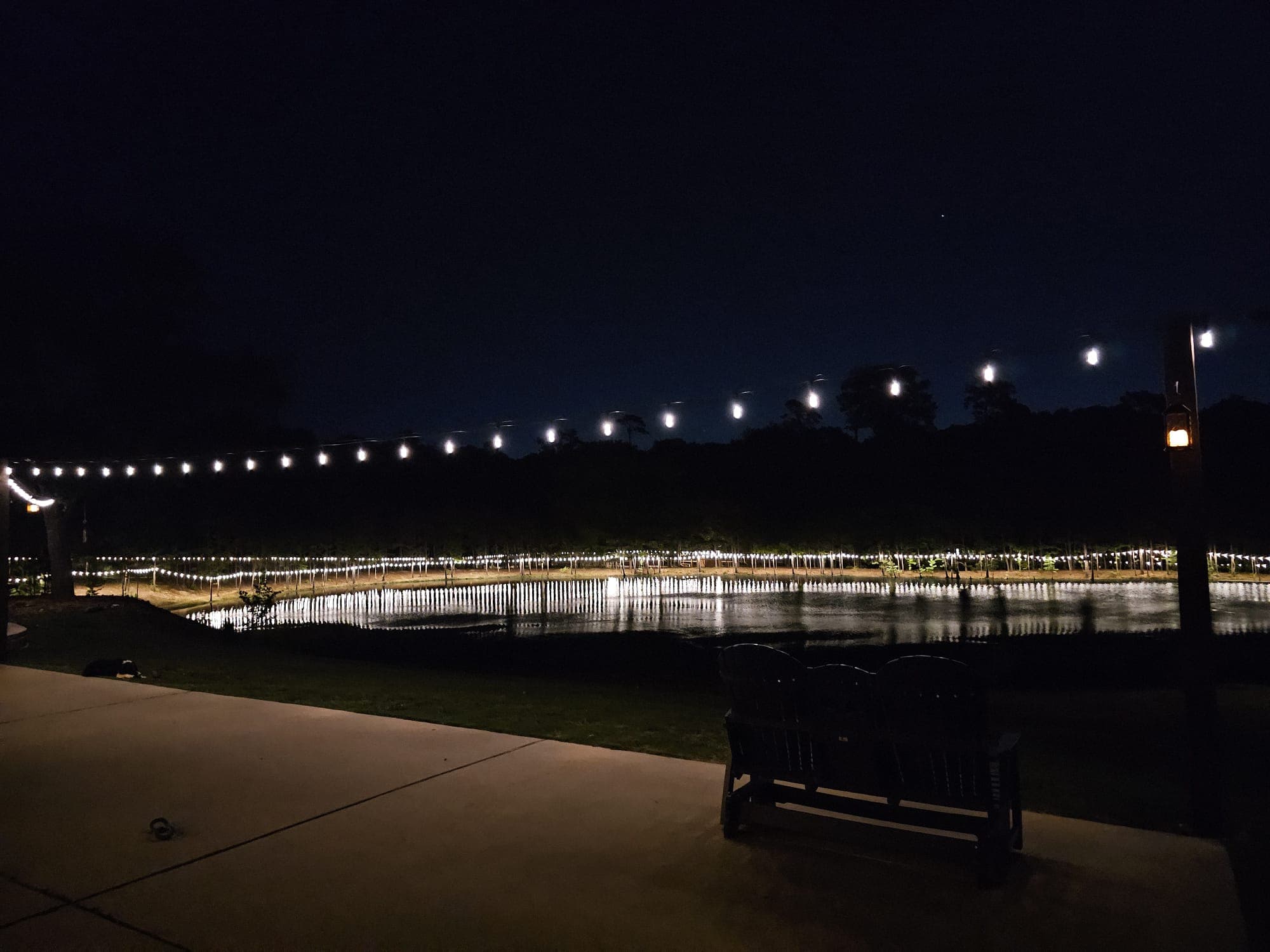
The natural world is one of God's most eloquent teachers of silence. A walk in the woods, a morning by the lake, an evening under the stars, these experiences quiet the soul in ways that no technique or method can replicate. The Catholic camp environment is particularly conducive to this kind of natural contemplation, offering a setting where the beauty of creation and the intentionality of spiritual community create an ideal context for encountering God in silence.
"For since the creation of the world God's invisible qualities, his eternal power and divine nature, have been clearly seen, being understood from what has been made." (Romans 1:20)
Common Obstacles to Silence
Anyone who begins a practice of silence will quickly encounter obstacles. Understanding these obstacles in advance can prevent discouragement and help you persevere through the inevitable difficulties.
The most common obstacle is restlessness. When we first sit in silence, the mind rebels. It produces an endless stream of thoughts, worries, plans, memories, and fantasies, anything to fill the uncomfortable void. This is entirely normal. The mind has been conditioned by years of constant stimulation to expect input at all times, and it does not surrender this expectation easily. The solution is not to fight the thoughts but to notice them without engaging them, like watching clouds pass across the sky without trying to grab them. Over time, the stream of thoughts will slow, and the spaces between them will widen.
Another common obstacle is boredom. Our culture has trained us to expect entertainment and stimulation at every moment. Silence offers neither. In silence, we are confronted with our own poverty, our own emptiness, our own inability to generate meaning and satisfaction from within. This experience can be deeply uncomfortable, but it is also deeply valuable. It teaches us that we are not self-sufficient, that we are creatures who depend on God for everything, including the capacity to find meaning in stillness.
Fear is another obstacle that surprises many people. In silence, things surface that we have been avoiding: unprocessed grief, unresolved conflicts, hidden sins, deep wounds from the past. The noise of daily life serves, among other functions, as a kind of anesthesia that keeps us from feeling the pain of these realities. When the noise stops, the pain emerges. This can be frightening, but it is also the beginning of healing. What we bring into the light of God's presence can be transformed. What we keep hidden in the darkness continues to fester.
Finally, many people struggle with a sense of failure or inadequacy in their practice of silence. They compare their experience to the descriptions of the great mystics and conclude that they are doing it wrong. They expect immediate results, dramatic experiences, and tangible spiritual consolation. When these do not materialize, they give up. The truth is that most silent prayer feels like nothing much is happening. The great contemplatives consistently testify that the deepest work of God in the soul is usually hidden, taking place beneath the level of conscious awareness. Faithfulness to the practice, regardless of felt experience, is far more important than any particular result.
The Fruits of Silence
Those who persevere in the practice of silence and solitude consistently report a cluster of spiritual fruits that confirm the wisdom of the contemplative tradition.
The first is increased self-knowledge. In silence, we encounter the truth about ourselves, both the beauty and the brokenness. We become aware of the interior noise that usually runs beneath the surface of consciousness: the anxious thoughts, the habitual judgments, the unprocessed emotions, the false narratives we tell ourselves about who we are and what we deserve. This awareness, while sometimes painful, is the necessary precondition for genuine transformation. We cannot change what we do not see.
The second is a deepened sense of God's presence. As the noise subsides, the gentle whisper of God becomes more audible. This does not mean that we will have dramatic mystical experiences, though some people do. More commonly, it means a growing sense of being accompanied, a quiet confidence that we are not alone, a subtle but unmistakable awareness of a Presence that is both infinitely beyond us and intimately within us.
The third is greater compassion. This may seem counterintuitive. How does withdrawing from people make us more compassionate toward them? The answer lies in the way silence changes our mode of relating. When we are constantly reactive, constantly bombarded by stimuli, we tend to interact with people from the surface of ourselves. We hear their words but miss their hearts. We respond to their behavior but overlook their pain. Silence creates the interior space that allows us to be truly present to others, to listen with attention and respond with wisdom rather than reacting from habit or impulse.
The fourth is freedom from compulsion. The constant noise of modern life is not merely a nuisance; it is a form of bondage. We become addicted to stimulation, dependent on external input for our sense of identity and well-being. The practice of silence gradually loosens these chains. We discover that we can be at peace without entertainment, that we can be content without constant validation, that our identity does not depend on the approval of others or the distraction of the next notification.
The Silence of the Cross
At the deepest level, Christian silence is not merely a spiritual technique or a path to personal tranquility. It is a participation in the silence of Christ, who was silent before His accusers, silent on the Cross, and silent in the tomb. The silence of Holy Saturday, when the Word of God lay voiceless in the earth, is the ultimate expression of divine self-emptying. In that silence, God was not absent but was accomplishing the most profound work of redemption the world has ever known.
When we enter into silence, we enter into this paschal mystery. We allow our own words, agendas, and self-constructions to die so that something new can be born. We consent to the poverty of not knowing, not controlling, not producing. We trust that God is at work in the darkness and the emptiness, even when we have no evidence and no consolation.
This is the ultimate paradox of contemplative spirituality: that in emptiness we are filled, in silence we hear the Word, in darkness we see the Light, and in death we find life. It is the paradox of the Gospel itself, and it is the secret that the contemplative saints have discovered and proclaimed across twenty centuries of Christian experience.
"Be still, and know that I am God." (Psalm 46:10)
The invitation stands, as fresh and urgent today as it was when the psalmist first composed those words. In the midst of our noisy, distracted, overstimulated lives, God whispers: Be still. Stop running. Stop performing. Stop filling every moment with sound and activity. Come into the silence where I am waiting for you. Come, and know that I am God.